Giraffe populations have dropped dramatically in the past twenty years, in fact in Northern Kenya the population has dropped by over 70% in the past two decades. Researchers have been working at finding a solution to decrease the rapid rate that giraffes are decreasing in population size. The road to that starts with observing the giraffes.
The status of the giraffe population has placed them on the International Union for the Conservation of Nature (IUCN) as Vulnerable and on the IUCN Red List of Threatened Species.
Poaching, habitat loss and disease has made them extinct in seven African nations. For a species that once had over 160,000 in 1985, there are less than 100,000 remaining. In the sub-Saharan desert, the extinction of the giraffe has gone largely unnoticed.
This is where you come in.
The researchers have set up an online site where users actively stream the footage and help the researchers make observations. This is a great way to make a global impact without having to leave the comfort of your own home. The crowd sourcing project invites the public to help organize the data, which is vital to the success of the conservation projects.
Those projects also provide people to actively engage in the protection of endangered species. More than 1 million images from the motion-activated camera in Kenya have assisted the researchers in cataloging each image and identifying and counting the animals caught on camera.
“Community conservancies are where we are seeing strong signs of hope with increasing giraffe population numbers and we are working hard to support those conservancies”, said David O’Connor, researcher and conservation ecologist for the San Diego Zoo.
1) This volunteer opportunity is one that can be fun and really convenient at the same time. Now it’s your turn: Come up with your own idea for a unique way to make the world a better place like this one! What is your idea, and how would it work ?
2) If you have already heard of other opportunities like this one – something fun and easy that helps make a big difference, what was it and what about it seems fun to you? If you haven’t heard of other ‘fun’ volunteer options, go searching online for ‘fun easy volunteering’ opportunities, and then report back: What is one opportunity you found that you would be willing to do, and what makes it so appealing to you ?
Learning Together:
What Are Social Host Liability Laws?
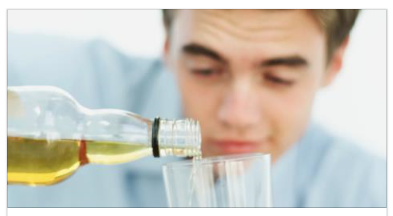
Did you know you can get in trouble for what people do after attending a party you’ve thrown? A California court found the young host of a party liable for the death caused by one of his party’s attendees who had been drinking.
Andrew Ennabe was a 19-year-old college student who was killed by a drunk driver in 2007. The drunk driver was Thomas Garcia. On the night in question, Mr. Garcia became intoxicated while drinking at a house party in Diamond Bar CA in 2007. Now he is currently serving 14 years for manslaughter.
Andrew Ennabe’s family sued the party host, however the original California court in which the case was heard dismissed the case on the grounds that Ennabe’s family hadn’t proven the party host’s responsibility in the matter. After the case was appealed, California’ s Supreme Court found that the case should be heard by the lower court under California’s social host liability laws.
While California may have a reputation for ‘progressive’ laws and the party host may not face criminal consequences in this particular case, the variety of cases which make their way through civil courts is plentiful. While you should always consider your actions from ethical and moral standpoints, the legal consequences of the choices you make should also be a consistent factor in your decision making process.
Whether you are a teen heading off to college, a recent graduate with a close call, or a parent worried for your student now that they’re living away from their childhood homes, we encourage you to share your experiences and thoughts on this matter in our comments section.
————————– Questions:
1) What social-host liability exists in Nevada? Is there criminal, civil, or both?
2) What is a situation you have been in where someone (maybe even you) could have ended up in trouble because of a ‘social host liability’ legal consequence?
3) Other than holding a house party where underage people drink (or do drugs), now that you are almost 18 or having reached the age of 18, what is a situation that you could easily find yourself in where you or a friend could end up in trouble for ‘social host liability’ reasons (Imagine if you ‘go off to college’ – what could happen there)?
4) In context to your response to Question 3 above, what do you plan to do to limit your criminal and civil liability under ‘social host’ conditions once you move out and start living on your own?
Be sure to provide full explanations for each of your answers. For more details, you can read the article this piece was sourced from here::
Hacker Out For Justice Exposes Assailants By Hacking Police Info,
Gets Himself (Predictably) Arrested & Convicted
On the night of August 11, 2012 at a party in Steubenville, Ohio, several male students – including two respected high school football players – committed acts of violence upon one of their classmates who had been incapacitated due to her ingesting alcohol and possibly drugs. The assault was filmed and photographed by the students committing the criminal acts.
On August 22, 2012 following the examination of more than 15 digital devices and over 60 interviews with students, school staff, and parents having been conducted by police, two teens were charged with crimes related to the incident. Initially, these would be the only charges. By November 2nd that year, the two suspects (the earlier mentioned football players) would be released on house arrest until their trials in March 2013.
The story remained mostly local until December 16, 2012 when a New York times article brought the story to a national spotlight, highlighting two main issues. First was the matter of the number of male participants in the assault that had gone uncharged despite having witnessed the assault, shared images of it on social media, failed to report it to lawful authorities, and then having attempted to and occasionally succeeded in destroying evidence – including of their own participation. The second matter was that of the adults in the town, as roughly half of the town held beliefs that the coaches and school administrators in charge of the students involved in the assault were themselves involved in a cover-up.
Around the same time, Deric Lostutter was living in Kentucky and beginning to come into his own as a hacktivist: an online hacker that uses their computer science skills to promote and support political agendas they care about. Just the night before on December 15 while going by his online alias KYAnonymous, Deric launched an operation with help from members of a hacker group called Anonymous that would result in plain clothes officers and members of the Hell’s Angels biker gang volunteering together to create human barriers around several funerals. Those barriers were needed to protect the mourners from the shouts and harassment of a hate group called The Westboro Baptist Church, who were planning to harass the mourners of the 20 elementary school children killed in the Sandy Hook active-shooter mass-murder incident of 2012.
Feeling successful and having seen the New York Times article, KYAnonymous turned his eye to Steubenville and created a video asking anyone who considered themselves a member of anonymous to take action. Over the next 14 days, people would take action, and Deric would be sent a 12 minute video showing Michael Nodianos – one of the uncharged members of the football team involved in the August 2012 Steubenville sexual assault incident – drunk and joking about the incident. To be clear: the footage was taken the same night that the incident occurred. KY Anonymous was outraged: It was clear some of what the New York Times article had been reporting was true – witnesses to and possible participants in the assault had gone uncharged by the authorities. He posted the video on January 2, 2013.
On April 17, 2013 less than a month had passed since the two football players originally charged with the assault had been convicted and sentenced to roughly 1 year in prison each. That was also the day the FBI raided KYAnonymous’ home and arrested him. Eventually, he would be charged him with violations of the Computer Fraud and Abuse Act. This eventually led to his being found guilty and sentenced to two years in jail: twice the length of time as the convicted teenage assault participants.
————————– Questions:
1) Why do you agree or disagree with the cause?
2) Why do you agree or disagree with the action?
3) Why do you agree or disagree with the punishment / consequences?
4) What cause – if any – would make you want to knowingly break the law, and why?
5) What are some better courses of action you can think of besides breaking the law in support of a cause you care about, or if you feel there aren’t any, what obstacles would prevent your from engaging in lawful resistance?
Be sure to provide full explanations for each of your answers. For more details, you can read the article this piece was sourced from here:
The First Amendment gives Americans the right to free speech, stating “Congress shall make no law respecting an establishment of religion, or prohibiting the free exercise thereof; or abridging the freedom of speech, or of the press; or the right of the people peaceably to assemble, and to petition the Government for a redress of grievances.”
The phrase ‘the right of people to peaceably assemble’ may not bring the same heated debates on interpretation as the language in the Second Amendment (the right to ‘bear arms’), however the lack of clarity has been the source of many a legal battle throughout American history. From the students of Kent University being shot at in 1970 to the recent protests over the Dakota Access Pipeline (DAPL), protesters and law enforcement have faced off in situations that have resulted in contested (though often times upheld) arrests.
When protesters turn violent or simply begin to destroy property, law enforcement agencies clearly have a mandate to control the situation. What about when protesters conduct ‘sit-ins’ or temporarily block roads during a protest? On one hand they are interfering with tax-paying citizens’ ability to use the resources they contribute to – What if one of those citizens was you and you were running late to work? On the other hand, they are being peaceful and attempting to exercise their constitutional rights to free speech and assembly to draw attention to a cause that is important to them…and maybe to you!
States across the country are currently putting laws in place to more clearly define these situations on what does and does not fit within the definition of the right to peaceably assemble. These pending laws might be inspiring you to ask a wide variety of great questions!
————————– Questions:
1) If ‘Congress shall make no law’, when states pass these laws restricting / limiting protests, are they legal? Should that be left to the Supreme Court to decide? What should the definition of ‘peaceably assemble’ be?
2) What are three examples of what you believe are reasonable and legal methods of protest?
3) What are three examples of what you believe are unreasonable and illegal methods of protest?
Be sure to provide full explanations for each of your answers. For more details, you can read the article this piece was sourced from here:
Thank you for letting us watch the civil case! It was cool because it was a real case and not one played out. I had a lot of fun watching the other kids act out a session. Thank you for your time.
- Kaylie [Hewetson Elementary - Grade 5]
Project Real
2020-12-11T20:39:35+00:00
Thank you for letting us watch the civil case! It was cool because it was a real case and not one played out. I had a lot of fun watching the other kids act out a session. Thank you for your time. - Kaylie [Hewetson Elementary - Grade 5]
Thank you for letting us experience court for the first time. It was the best experience ever, thank you for everything. You really made me think about being a judge. Thank you
-Mina L [ Twitchell Elementary - Grade 5]
Project Real
2020-12-16T22:04:09+00:00
Thank you for letting us experience court for the first time. It was the best experience ever, thank you for everything. You really made me think about being a judge. Thank you -Mina L [ Twitchell Elementary - Grade 5]
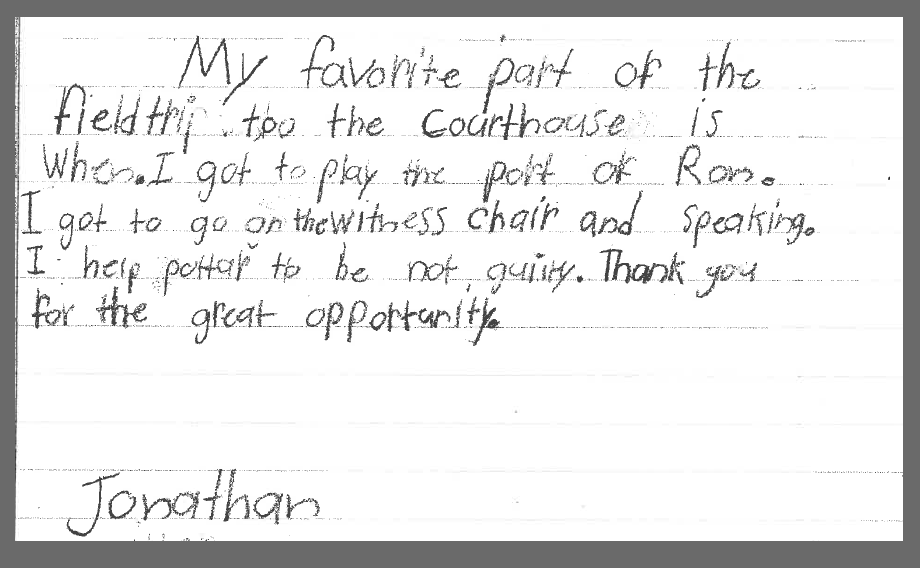
My favorite part of the fieldtrip to the courthouse is when I got to play the part of Ron. I got to go on the witness chair and speaking. I helped Potter to be not guilty. Thank you for the great opportunity.
- Johnathan M [Harmon Elementary - Grade 4]
Project Real
2020-12-16T21:47:04+00:00
My favorite part of the fieldtrip to the courthouse is when I got to play the part of Ron. I got to go on the witness chair and speaking. I helped Potter to be not guilty. Thank you for the great opportunity. - Johnathan M [Harmon Elementary - Grade 4]