Aliens, Antics, & ‘Illegal Immigration’: The Truth is Out There
A Government Hotline
& Reporting (Space) Aliens?
In April 2017, President Trump’s administration launched a hotline for crime victims to call if they believe they were the victims of crimes committed by people that are in America illegally. The White House’s goal was to create a means for Immigration and Custom Enforcement (ICE) agents to prioritize cases to research and follow up on.
Social activists with a sense of humor felt that the President’s administration and the leadership team at ICE have been wrongfully demonizing immigrants. Since immigrants are often referred to as ‘illegal aliens’, thousands of outraged citizens began calling the hotline to leave messages reporting plotlines from classic films featuring extraterrestrial aliens (”A small creature with a long neck, wide body, and glowing finger stole my Reese’s Pieces” or “Something jumped on my face and now I feel like my chest is about to explode” were common examples).
The subject of immigration and enforcement of immigration law is at the heart of many national debates across the country. In fact, people are very passionate about their feelings on the subject and can often react with anger and shouting. While the hotline may have been well intentioned, it was clearly perceived as offensive by some segments of America. With the national debate being as intense as it is, it is nice to see that this act of protest chose humor over shouting as a way to express feelings that conflict with people on the other side of the debate. Hopefully more laughs will help heal a divide created by divisive subjects in national conversation.
————————– Questions:
1) How do you feel about the hotline, and what causes you to feel that way?
2) Do you think there could be some benefit or are you entirely against it, and why do you feel that way?
3) What about the protesters’ decision to use humor to express their dissatisfaction with a national policy – Why and how do you find their tactics either effective or just silly?
Be sure to provide full explanations for each of your answers. For more details, you can read the article this piece was sourced from here:
‘Your Government’ Sent You a Follow Request.
Do You Accept?
China’s government has begun to implement a system that ranks its population with a score based on their ‘social credit’.
The Chinese social credit score is similar to a financial credit score – it moves up or down depending on the behavior of the person being scored. The program is already being piloted for millions of Chinese citizens, and China’s government hopes the system will be in place for all of its citizens by 2020. The program was first announced in 2014. According to a government document, the system is meant to support the national ideal that “keeping trust is glorious and breaking trust is disgraceful.”
Any number of actions can impact a person’s social credit score in China’s program like trying to ride a train without a ticket, smoking in a non-smoking area, lingering in public spaces without explanation. Those are all reasons someone’s social score might be lowered, and they may seem reasonable – but there are other reasons that seem more troubling.
Whether someone buys unnecessary items, the amount of time they spend playing video games, what they post on social media, and if they spread what the government deems to be fake news are also sources of social score point reductions.
If you’re not already familiar with the Chinese Government’s definition of ‘fake news’, Google ‘China Government Tiananmen Square State News’, find a reliable source to learn from, and read an article or two about it. Then, think about their social scoring system again. (Spoiler Alert: If the Chinese government doesn’t like a story, they just delete it and can arrest the person who wrote it)
Refusing military service can also have a negative effect on your score.
If someone happens to get a bad social credit score, they could face barriers such as restricted travel. Meaning if your score is low enough you could be prevented from buying domestic flight tickets and business-class train tickets. You could also be barred from enrolling in higher education, unable to continue your studies and may not be able to enroll your kids in private schools.
Think about that: If you’re a straight A student that plays a lot of video games, you could be barred from enrolling in higher education because of how much you enjoy gaming – despite your good grades!
Having a good social credit score can also provide rewards like speeding up travel applications, receiving discounts on energy bills and even getting more matches on dating websites! Some citizens in China claim that the system has already made people’s behaviors improve.
————————– Questions:
1) If a system like China’s ‘social credit score’ program were to be implemented in America by the US Government, how would the program violate or not violate American citizen’s constitutional rights?
2) Constitutional rights aside, why would you want to live or not live in a country with a social scoring system?
3) If you were forced to live in a country with a social scoring system, what protections would you put in place to make sure everyone was treated fairly by the system? For example: If someone proposed points should be awarded to people that participating in sports, would that be fair to a quadriplegic? Should quadriplegics get bonus points? Is that fair for people that just don’t like sports? This sounds challenging, but in the context of the questions above, pretend that somehow the system could be made to be fair: what are the first 3 steps you would take?
A Montana Prosecutor Wants to Jail
Moms-To-Be Who Drink or Do Drugs
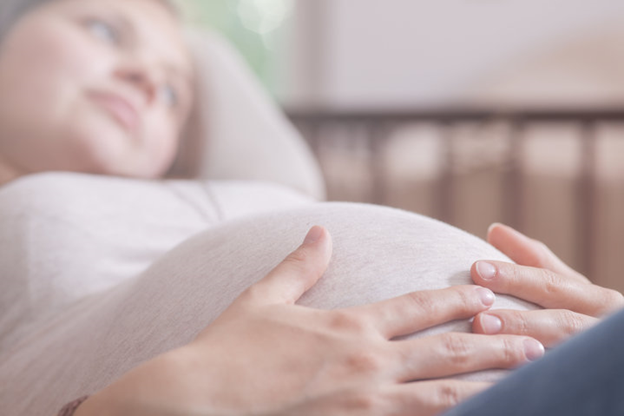
On January 24th, 2018, the prosecutor’s office in Big Horn County, Montana is cracking down on any expectant mothers who use drugs or drink alcohol. A court attorney is fighting to seek restraining orders against those pregnant women and is encouraging the public to report drug or alcohol incidents to the sheriff department.
The reason behind this movement is to limit child abuse during labor and to make the mother accountable for her actions. According to the article, roughly half of all U.S. states now consider substance abuse during pregnancy to be child abuse. One way it is child abuse is a birth defect called ‘sudden infant death syndrome (SIDS).’
On the flip side, if the government intervenes on the well-being of a mother and her baby, it will cause a slippery slope that will jeopardize with the well-being of the mother and the fetus. Another aspect is that a woman will refuse to seek help if they feel they will be reprimanded for their outreach, which causes a discrepancy within the health provider’s field.
When it comes to the aspect of law and justice, many roles are filled by police officers, prosecutors, and judges. Police officers are tasked to patrol certain areas and stop, and or prevent crime from happening. If there is probable cause or reasonable articulable suspicion, the officer has a right to issue a stop and act accordingly per state laws and policies. As for Prosecutors, if a person is charged with a crime, the prosecutor reviews all of the evidence that is presented within a case. Lastly, for the judge evaluates all of the aspects of the case and pleads the defendant guilty or not guilty.
————————– Questions:
1. Why do you think it is or is not ethical to prosecute expected mothers who use drugs or alcohol?
2. How is the mother hurting the unborn child while using drugs or alcohol?
3. Do you think the judge’s policy will help reduce the number of cases of SIDS in the community, have no impact on the number of cases, or cause an increase in the number of cases, and why do you think the policy will have that effect?
4. Why do you feel the judge’s plan is the best one for the community, or what better solutions would you recommend and why would you recommend those over the one the judge has come up with?
Be sure to provide full explanations for each of your answers. For more details, you can read the article this piece was sourced from here:
Would You Like a Side of Gender Discrimination with Your Order?
An upscale French restaurant called L’Orangerie, in West Hollywood, California got a lot of bad attention in 1980 after a woman named Kathleen Bick and a man, named Larry Becker sat down for dinner and were handed two menus. Why? Because the menu handed to Larry was green, and the menu handed to Kathleen was white. Color wasn’t the only difference between the two menus though: The white menu that had been handed to Kathleen was what the restaurant called a “ladies menu” and it listed all the items that could be ordered, but there were no prices next to each item! The green menu that had been handed to Larry had the same items, but this one included the prices next to each item! For example, a serving of lamb would have cost $26 at the time (that would cost about $82 today!).
The different menus reflected a European tradition: Just assume that the man always pays for the woman’s meal. Other ‘high-end’ (fancy) restaurants in the United States did the same thing at the time, but it wasn’t a super-popular thing to do so Larry and Kathleen didn’t know to expect it. The two got really mad (why after all should Kathleen be treated any differently) and they just left the restaurant without ordering. Kathleen stated that she felt “humiliated and incensed [angry and enraged]”, when given the ladies menu. Instead of ordering lunch, they ordered a lawsuit by calling a lawyer: Gloria Allred (who happens to be really famous – Google her sometime)!
When asked by their lawyer to explain the menus and why Kathleen had been treated differently, the restaurant owner just said “It is the French way”. That lack of an apology or good reason, along with the owner’s refusal to end the dual menu when Ms. Allred requested it led her to file a lawsuit on behalf of Kathleen and Larry. Gloria said the two had been discriminated against based on their genders. If that did happen, then it would have violated California’s Civil Rights Act (a law against discriminating against people).
For money, the lawsuit only asked the restaurant to pay $250 for the inconvenience, which wouldn’t have been a big deal, but it also demanded that they stop using 2 menus. The restaurant owners defended their practice as the same as other practices some men did for women at the time like “…lighting a cigarette or standing up when she enters the room.”. The courts were getting ready to hear the case, but Ms. Allred didn’t want to wait, so she decided to try something else. Allred and her clients set up a table with an elegant place setting in front of the L’Orangerie restaurant, and called a bunch of reporters. They showed up and covered the outdoors protest dinner extensively on television, radio and in newspapers. The strategy worked and eventually the restaurant ended their dual-menu practice. That led to Gloria dropping the lawsuit with her clients’ permission.
Restaurants in the United States that still practiced the dual menu, which were few and far between already, were warned in a 1981 publication that they may lose in court if they continued this practice, and it seems most of them stopped doing it. It is not 100% known if any restaurants in the United States that still follow this practice. If they do, let’s hope that Gloria Allred doesn’t know about it.
———————— Questions:
1: Why do you think the two plaintiffs in this case either exaggerated or didn’t exagerate their reaction to the dual menu practice?
2: Why do you think they were or were not justified in feeling discriminated against?
3: If this had happened to you, why would you have sued or not sued the restaurant?
4: Here in Nevada several years ago, the Las Vegas Athletic Club faced a complaint with the Nevada Equal Rights Commission after a woman was given a free membership to the club but her husband was forced to pay an enrollment fee for the exact same thing! The couple filed a Civil Rights complaint against the gym, claiming discrimination because of his gender. The commission isn’t the same as a court, but it can issue fines. In this case, it found that the practice was discrimination. Many businesses have similar practices – they encourage women to attend for lower or free rates, and charge men full price. They argue that it is fair because men have been treated better for years (like having the right to vote long before women) so it’s just ‘making things even’. What do you think: Why are ‘deals’ given to women a bad form of discrimination, or why aren’t they so bad?
Be sure to provide full explanations for your answers. For more details, you can read the articles this piece was sourced from here:
https://api.atlasobscura.com/articles/ladies-menus-no-prices-lawsuit
https://www.clubindustry.com/commercial-clubs/commission-rules-against-las-vegas-athletic-club-0
Real Heroes Don’t Always Wear Capes: #BlackPantherChallenge
Finally kids can see a movie where the main superhero looks like them (without having to sneak into an R-rated vampire flick or sitting through a Razzie-winning Catwoman). People are so excited, that over 100 GoFundMe pages have been created to send young children (primarily of color) from low income families to see Marvel’s Black Panther…
These movie-ticket drives are happening across the nation in droves.
GoFundMe accounts have multiplied into the hundreds with politicians, entertainers and the director of the Black Panther movie contributing.
The original drive was originated by New Yorker Frederick Joseph, who found that that the feature film Wonder Woman empowered girls, thought the Black Panther movie would do the same for students primarily of color. He started the original #BlackPantherChallenge early last month and so far has raised $430k to send over 30,000 children to the movie.
Cities supporting the GoFundMe drives for the #BlackPantherChallenge range from Detroit, Michigan to San Diego, California.
————————– Questions:
1)Wonder Woman empowered young women when it was released, and it had been a long time since there was such a successful superhero movie featuring a lead female superhero. Given those conditions, why weren’t there similar fundraisers to take young women to see Wonder Woman?
2) How do superheroes (or just other really generous and community-minded people) inspire you to do things like organize a trip to the theater for a large group of children?
3) Are the many #BlackPantherChallenge campaigns inspiring you to do something to improve your community? If they are, tell us what you plan to do!
Be sure to provide full explanations for each of your answers. For more details, you can read the article this piece was sourced from here:
Is a $50 Traffic Ticket Worth
Losing your Independence Over?
Angry because of a ticket resulting from a minor traffic infraction, a Maryland man, Eugene Matusevich, began relentlessly harassing the officer who wrote the ticket through texts, social media and more. These texts ranged from jokes about donut runs to sensitive personal details. How did he obtain this information?
A friend of his.
Zak Nicholas Thompson, who worked at a financial services company, had access to the officer’s name, phone number, home address, Social Security number, his financial information (including salary information)…even the make and model of the officer’s personal vehicle. He took that information and gave it to Matusevich.
The officer quickly became deluged with texts and phone calls soliciting offers from companies, including a drug rehabilitation center. Insulting messages about the officer were also posted to his family’s Facebook accounts along with demeaning messages about the neighborhood he lived in, and even the type of car he drove.
At one point, he received 17 texts in less than an hour from Matusevich.
Thompson’s lawyer explained his client’s intent wasn’t to aide Matusevich in a full blown harassment campaign of a law enforcement officer. The lawyer implied that Thompson thought the information would only be used for an angry message or two by his friend.
————————– Questions:
1) The lawyer stated that this was not the case, but do you think that Thompson knew what he was doing when he provided his friend the police officer’s personal details and contact information?
2) Why do you think Thompson either realized or didn’t realize that by giving this information to his friend that he would be held responsible, even though he never contacted the officer?
Be sure to provide full explanations for each of your answers. For more details, you can read the article this piece was sourced from here:
Volunteers Feed The Homeless,
Get Arrested By Police
On January 14th of 2018, 12 people from a volunteer group were arrested for handing out food to the homeless.
To provide some backstory to this situation, a community group called “Break The Ban” were distributing food and other items to the homeless population at a park in California. According to the police officers that arrived, they were violating a ban on sharing food in city-owned public areas, which was recently passed by the City of El Cajon in 2017. The reason for this ban was to stop the spread of Hepatitis A. the police cited some of the volunteers to jail but did not take them. But, for the two volunteers they arrested are scheduled to appear in court. The group was outraged by the act and is planning to fight the citations and the food-sharing ban.
There was another case in which this incident has occurred. According to Forbes, in Fort Lauderdale, police arrested a 90-year old man and two ministers in 2014 for trying to share their food with the homeless. In October of 2014, the city enacted an ordinance that bans sharing food in public parks, unless they have a permit from the city. As a result of this situation, the organization arrested (Food Not Bombs) sued the city of Fort Lauderdale on the basis of the ordinance violated their right to free speech and free association, and the ordinance was “unconstitutionally vague.” At first, a federal district court dismissed the case since food sharing events were outside the scope of the First Amendment since it did not convey a “particularized message.”
But, under that line of reasoning, that sounds like the First Amendment is confined to expressions conveying a particularized message. So, as a result, the case was ruled that Food Not Bombs does have a First Amendment right to share food. The case was sent back down to the lower courts to determine if the city’s ordinance was in violation of those rights. The city of Lauderdale has not responded to the request yet.
————————– Questions:
1) How does the First Amendment apply to these news stories?
2) Why do you feel the ordinance being issued to prevent the spread of Hepatitis A was or was not justified?
3) Are there laws in your community restricting feeding the homeless, if so what are they, how do you feel about there being or not being laws about this activity in your community, and what can you do to support/change those local laws/policies?
4) (High School Students only) Even if you disagree with the policy in this case, imagine that there are some activities that people volunteer for or donate to that are meant to ‘make the world a better place’, but which should be managed or limited by local laws. How should local governments and law makers decide if an activity requires them to get involved in those activities (ex: Should sheltering homeless animals and feeding the homeless face the same kinds of restriction)?
Be sure to provide full explanations for each of your answers. For more details, you can read the article this piece was sourced from here:
Hawaii Community’s New Law:
Don’t Text While Crossing the Street!
Have you ever caught yourself not paying attention to your surroundings because of an electronic device? Mayor of Honolulu, Kirk Caldwell, has signed a bill to make it illegal to look down at an electronic device while crossing the street or highway. The ban is aimed at making the streets safer and ensuring that pedestrians pay more attention to their surroundings. A first violation gets you a $15 to $35 fine. It’s a $35 to $75 fine for a second offense. A third offense could cost you as much as $99.
This is something that was aimed at public safety.
—————————-
Questions:
1: Why do you think this law is likely or unlikely to take off as a law in cities across the United States?
2: Choosing to walk and text in the street at the same time seems like a personal choice – if a person wants to be dumb and risk getting hit by a car, that could be up to them, right? Give two examples of laws that are similar to this one, explain what makes them similar, and then explain why you think those restrictions became laws in the first place.
3: Why do you think this is a reasonable or unreasonable law in general (meaning why you think it is a good or bad thing that this law exists)?
Did you know that there is a law in the United States that allows for warrantless surveillance between people in the U.S. and in foreign countries. Section 702 of the Foreign Intelligence Surveillance Act (FISA) is pending reauthorization from Congress. Some want to reform this piece of legislation in order to prevent dragnet surveillance, backdoor searches of phone and email records, and unlawful targeting of communities of color and immigrant communities. . This law is due to expire this year and would go away, unless Congress reauthorizes a provision.
This is an issue of privacy and national security. It is an issue of national security because often times it was through this piece that the government watches over conversations between people in the U.S. and people in foreign countries. This is a topic that has sparked quite the discussion!
————————– Questions:!
1) This article is being written in 2017, but Project REAL will be around for many years to come! Given that, find out what happened with this law in 2017, and where the policy stands today. So, (after your research)…What’s the Update?!
2) The policy this article is about was designed in response to the event following 9/11 :: The terrorist attacks in 2001. Given the need for national security, what are your feelings about the policy?
3) What are some ideas you have for striking a balance between the right to privacy with the need for national security?
4) How do laws shaping how the government deals with its citizens’ privacy impact your day-to-day life (and don’t try getting out of answering this by saying ‘it doesn’t’ :: we don’t offer a lot of questions where there can be a wrong answer, but THAT is definitely a wrong answer!
Be sure to provide full explanations for each of your answers. For more details, you can read the article this piece was sourced from here:
Experts Say Leaking Information is
as American as Apple Pie?!
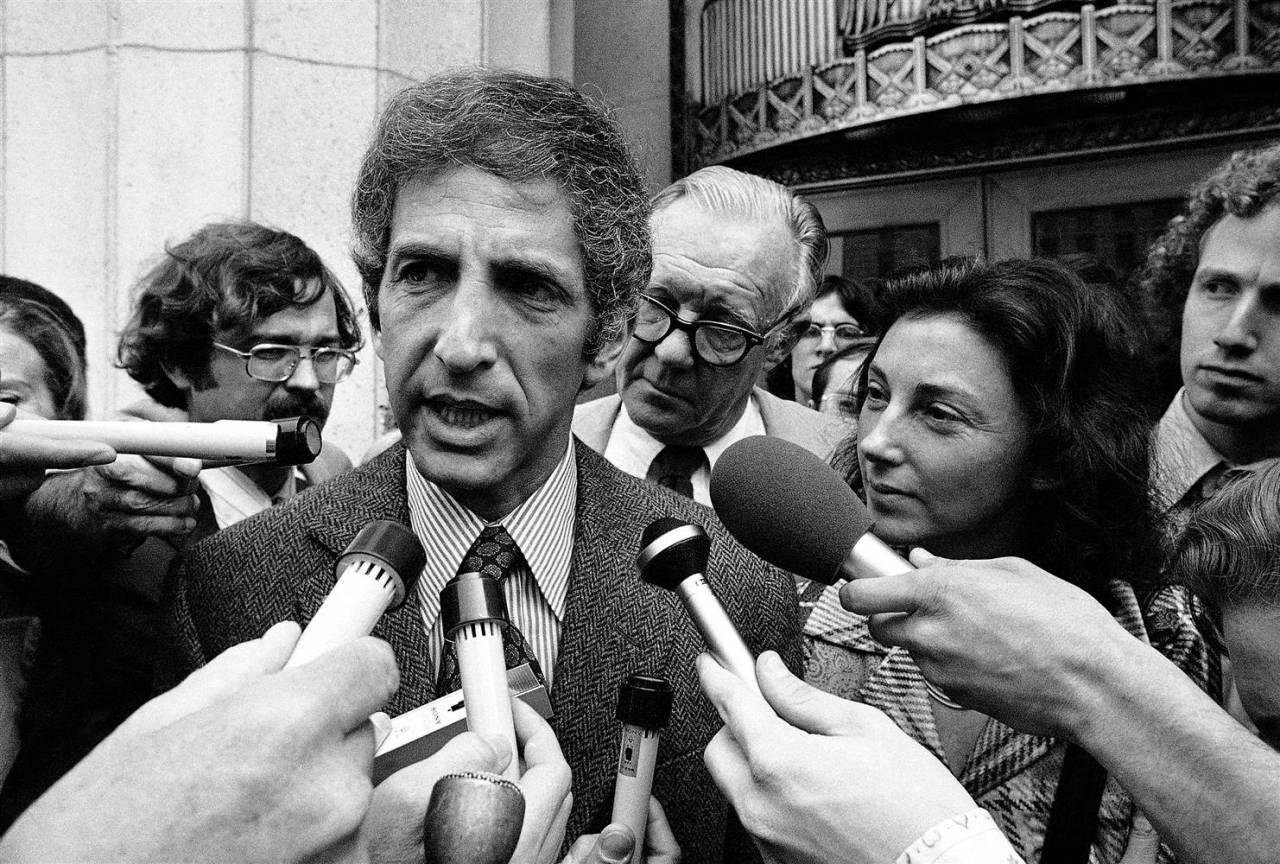
In some cases, leaks have changed the course of American history while shaping the nation’s laws. There are a number of statutes that criminalize leaking information, yet not all leaks are necessarily criminal.
Leaks in modern history that are certain to remain historically notable include those of Edward Snowden, Chelsea Manning, Shadow Brokers’ NSA Hacking tools data dump, and the early days of The Trump Presidential Administration. Despite taking up significantly more air time in media outlets, the majority of leaks from the offices of President Trump remain unsubstantiated. The leaks of Edward Snowden, Chelsea Manning, and the Shadow Brokers have had an immediate and lasting impact on American history.
In the case of Edward Snowden, we encourage students to read our book ‘The Government, Privacy, and You’ (free copies of which can be requested using the ‘OUR PROJECT’ section of our website – which you’re already on). As of the publication date of this post, Mr. Snowden remains in Russia with the possibility of being charged with treason, espionage, and criminal release of classified information hanging over his head.
Chelsea Manning – who was recently released from prison following a presidential order of clemency issued by President Barack Obama in his last days in office – released information to WikiLeaks that had significant impacts on American foreign policy. Most notably, Manning released a video of an airstrike in Afghanistan in which over 80 civilians were killed by US forces after the details of the operation had been held back from public release, and the release of diplomatic communications which (upon their release) resulted in many of the ‘Arab Spring’ uprisings of 2010-2012.
The Shadow Brokers was a hacker collective that released reports and files created by the NSA. The information included a number of tools and exploits that could be used to monitor or control people’s personal electronic devices. Following the Edward Snowden leaks (which revealed the US government had digitally programs that involved at least the possibility of domestic surveillance), the implication of the Shadow Brokers release was that the NSA had tools for spying not just on terror suspects but American citizens.
These are just a few examples of leaks that changed the history of America and the perception of the administrations in power at the time of their release. Republican, Democrat, Independent, Liberal, Conservative, or Moderate – information leaks have impacted administrations and governments of all types throughout American history.
————————– Questions:
1) What is a government leak you’re already familiar with? If you don’t know one, research one and summarize it in 1 – 6 sentences:
2) Regarding that whistleblowing incident – who do you believe was ‘right’ in the situation, and what about what you know about that whistleblowing incident leads you to that conclusion?
3) Whistleblowing is a challenging subject for the people coming forward: They might have legal protections to their job and their freedom, but how can they be expected to stay at a place where they betrayed the trust of the organization (even if the organization was doing something bad)?
4) Whistleblowing can also be a challenging subject for people being reported on: What if the whistleblower is wrong and what the company/person was doing is allowed? If they fire the ‘whistleblower’ they can face major punishments (financial penalties) for firing the person (it’s called retaliation). What can be done to prevent situations of false / improper whistleblowing? An example would be people posting videos of how fast food is made on Tick Tock. If a company isn’t pretending the food is ‘natural and organic’, why should (or shouldn’t) their employees really be allowed to post videos of that process?
Be sure to provide full explanations for each of your answers. For more details, you can read the article this piece was sourced from here:
Thank you for letting us experience court for the first time. It was the best experience ever, thank you for everything. You really made me think about being a judge. Thank you
-Mina L [ Twitchell Elementary - Grade 5]
Project Real
2020-12-16T22:04:09+00:00
Thank you for letting us experience court for the first time. It was the best experience ever, thank you for everything. You really made me think about being a judge. Thank you -Mina L [ Twitchell Elementary - Grade 5]
Thank you for letting us watch the civil case! It was cool because it was a real case and not one played out. I had a lot of fun watching the other kids act out a session. Thank you for your time.
- Kaylie [Hewetson Elementary - Grade 5]
Project Real
2020-12-11T20:39:35+00:00
Thank you for letting us watch the civil case! It was cool because it was a real case and not one played out. I had a lot of fun watching the other kids act out a session. Thank you for your time. - Kaylie [Hewetson Elementary - Grade 5]
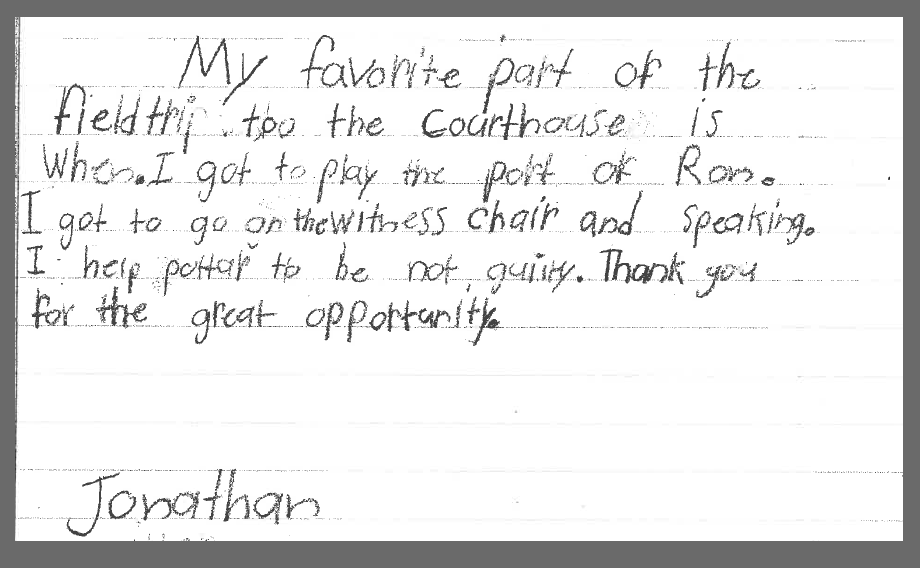
My favorite part of the fieldtrip to the courthouse is when I got to play the part of Ron. I got to go on the witness chair and speaking. I helped Potter to be not guilty. Thank you for the great opportunity.
- Johnathan M [Harmon Elementary - Grade 4]
Project Real
2020-12-16T21:47:04+00:00
My favorite part of the fieldtrip to the courthouse is when I got to play the part of Ron. I got to go on the witness chair and speaking. I helped Potter to be not guilty. Thank you for the great opportunity. - Johnathan M [Harmon Elementary - Grade 4]