Since we began including the budget-calendar tool with our 2nd edition of Adulting 101, we’ve typically had to annually update the sheet’s dates manually. The original designer built the calculator function into the third column using some basic formulas, but they were no MS-Excel formula-master. To this day, while our team uses Excel, regularly, we’re not exactly joining those Excel competitive tournaments (it’s a thing: look it up!).
Still, thanks to our dedication to innovation, our desire to impact students for years after their last contact with our team members, and a cautious willingness to engage with AI, we were able to finally update the date formulas in the tool. Now, student’s can simply and quickly create new tabs each year (though the current downloadable workbook already has sheets for each year extending to 2030).
That all might sound like too much insider baseball…until you realize what the budget tool is, and how it benefits young adults chasing after independence.
The Project REAL Budget Tool is part calendar, part calculator, part planner, and part spending journal. While there are many budgeting apps out there, we’ve yet to find one quite like this, which is why we make it available to anyone seeking it out.
The tool was originally created for young earners and early-career individuals navigating tough financial realities—people living paycheck to paycheck who can’t simply follow advice like “save 20% of every paycheck.” Advice like that often comes from “experts” who haven’t had to rely on food stamps between jobs or choose between paying the power bill or buying groceries, even while working full-time. Our tool is for those who want to be financially responsible but are dealing with circumstances that demand hard choices and sacrifices. Even if your financial situation is more secure, this step-by-step, practical approach can still be valuable when you’re ready to build wealth.
We encourage you to take the time to explore the tool and consider making it a regular part of your routine as you work toward a prosperous and independent future. If you’re a young adult, we hope you find the tool useful. If you’re an adult who can share it with young 18-25 year olds, we sincerely appreciate you helping to introduce our work to a generation of people who will really benefit from having access to it, so thank you!
You can read more about the tool and find the chapter of Adulting 101 information it accompanies here:
Friends, Supporters, and Extended Project REAL Family,
As the year wraps up, we wanted to share an exciting update and a brief look ahead to what’s coming next.
After the first 8,600 Southern Nevada Youth Resource Guide pocket guides arrived in November, they were gone within three weeks. What followed was something we had not experienced before: a tsunami of sudden demand at a scale and pace that was unprecedented for us.
Many of you responded immediately when we announced a plan to address that need. Over the course of a single week, supporters collectively donated just over $3,800, allowing us to place the order in time for SNYRG ‘Digital Access Kits’ to arrive and move through schools and partner offices before winter break.
Within just a few days of arrival, nearly all of the 16,000 kits were distributed. CCSD’s School Services office took 11,000 and gave out 50 kits to each social worker in the school district! Additionally, kits went to Title I specialists, school resource officers, and even hospital discharge nurses following direct requests from system partners. The speed and structure of that rollout confirmed the guide was landing exactly where it was needed.
This first edition of the guide was developed to respond quickly to immediate community conditions. Over the next six to eight months, we’ll be working on an improved second edition informed by what we’ve learned and by feedback from partners using it in the field.
This fall was busier than usual. Typically, we spend more time in the fall making reservations for the spring. This fall was busier than usual with field work though. Since August, we served 2,714 students through courthouse field trips, REAL Ready talks, REAL Safe experiences where students received Adulting 101 guides, and two new schools using Choices and You. This is a trend we look forward to building upon in the years to come.
Looking ahead, we already have 800 students scheduled for field trips, 1,400 booked for REAL Safe (the relationship violence prevention experience built into Adulting 101), and 300 set to take part in our Harry Potter mock trials! That’s just what’s been RSVP’d so far though: we anticipate those reservation numbers to double by the end of spring, especially as we approach REALReady season in late April and early May.
That’s exciting on it’s own, but it doesn’t even begin to account for a planned Adulting 101 print run being funded by a Nevada Bar Foundation grant, and two match-funding challenges. Within days of our announcing the possible print-run, schools began submitting advance requests to have us distribute guides to their seniors in the spring. To date, more than 10,500 Adulting 101 guides have already been reserved for spring, pending availability from that upcoming print run.
We’re looking forward to filling all 10,500 of those requests (and more) as we complete the campaign to fund the next Adulting 101 print run.
Thanks to the Nevada Bar Foundation grant, we’re already $20,000 into the approximately $83,000 needed to print 15,000 copies for Spring 2026. From there, we have $22,000 in matching challenges to unlock over the spring, along with an additional $21,000 to raise to fully fund the project. While that may sound ambitious, it’s a path we’ve successfully walked twice before. Each time, the campaign has come together because the need is clear, the timing is right, and the value of Adulting 101 is easy for schools, partners, and supporters to see.
In the weeks ahead, we’ll be having more focused conversations around this effort. That will include individual gifts, introductions to small and large businesses interested in sponsorship, and partnerships that can help underwrite distribution at scale. Not everyone engages in the same way, and all of those forms of support matter.
For those already making year-end giving decisions, gifts made now will support the Adulting 101 print run and apply toward unlocking the matching funds as we head into the new year. If that feels right for you, you can give here:
https://projectrealnv.org/
However the year has looked for you, we’re grateful to be part of a community that shows up when the work is real and the timing matters, and we look forward to sharing what comes next.
Thank You, Best Regards, & Happy New Year!
-M.
—
Mike Kamer
Executive Director, Project REAL
(702) 703-6529
mkamer@projectrealnv.org
LAS VEGAS, NV (Thursday, October 23, 2025) — A pocket-sized guide created by a Las Vegas high school student is now available for local teens and young adults (ages 13–25) who are facing homelessness or at risk of it. For those vulnerable young Nevadans, the guide offers encouragement and instructions for finding help quickly.
The Southern Nevada Youth Resource Guide, or SNYRG (pronounced “synergy”), lists more than 50 local agencies, the services they provide, and tips for accessing them. Designed to fit in a pocket or alongside a phone, the guide connects youth with housing, food, health, and other essential services.
The idea came from Oni Boulware, who began compiling the guide during her junior and senior years as a high school student in Las Vegas. Working independently rather than for a school or work project, Boulware wanted to make it as easy as possible for struggling local youth to find help in a crisis.
When Boulware partnered with Project REAL, the team refined the concept, added design elements, and prepared it for printing. In the process, the guide grew from an emergency-only resource into one that could also prevent homelessness by helping young people connect with support before they lose stable housing.
“Oni came to us with well-organized research: locations, hours, websites, and tips for accessing services,” explained Project REAL Executive Director Mike Kamer. “We built the guide around that research with two goals in mind: making sure kids would pick it up, and ensuring they felt invited and encouraged to use the services, not like they were a last straw to reach for in desperation.”
That approach shaped every decision in the finished guide. The subtitle, Supporting Local 13–25-Year-Olds with Housing Help, Supplies, Services, and More, was chosen to communicate what the guide offers without using words that can carry stigma, such as “shelter” or “housing.” Nearly every page features photos of young people in the same age range the guide is designed for, representing a range of backgrounds, appearances, and social circles accessing the services being listed.
“When you see people like you in these pages, it makes it easier to take that first step,” said Boulware. “It means a lot to know the work I started is now something kids across Southern Nevada can carry with them and use when it matters most.”
Printed copies are available to the public at more than 100 locations across Clark County, including most Clark County–Las Vegas and Henderson library branches, certain Clark County community centers, the Legal Aid Center of Southern Nevada, and a range of service providers and nonprofits supporting unhoused youth. Parents can have their students request copies from CCSD social workers at all Title I schools and high schools, HOPE staff, and Communities In Schools site leaders at local middle and high schools.
Digital copies and the full distribution list are available at https://projectrealnv.org/
For interviews from Project REAL: Mike Kamer, mkamer@projectrealnv.
About Project REAL
Project REAL is a 501(c)(3) nonprofit founded in 2004 that helps young people understand the laws that impact their lives, preparing them for civic life by teaching them about their rights, responsibilities, and resources under the law. Project REAL has provided free educational experiences to over 250,000 students across Nevada, giving them the knowledge and skills to make informed decisions, strengthen their communities, and build brighter futures.
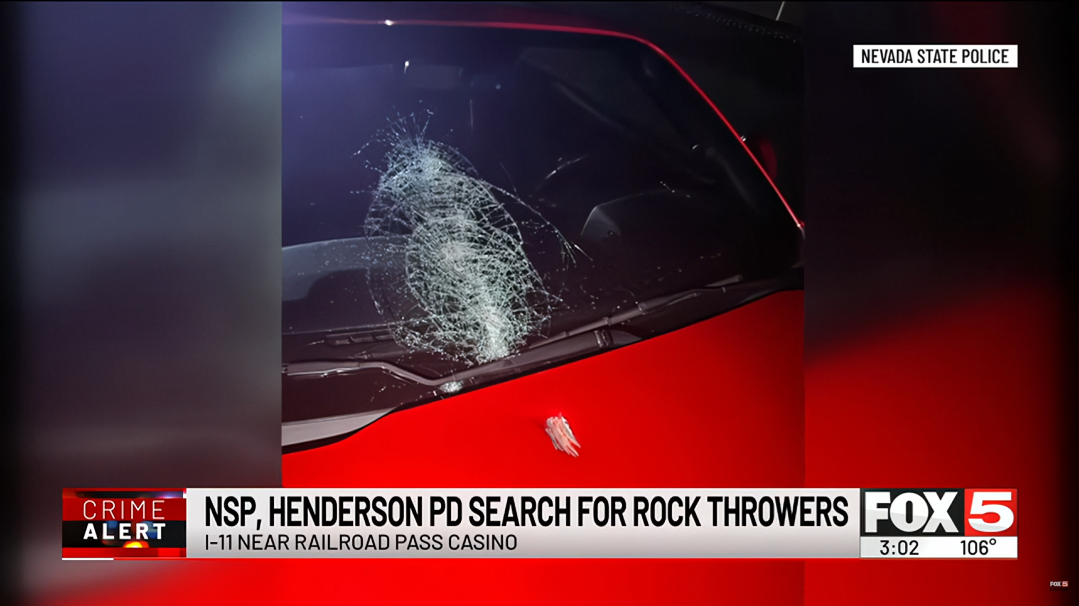
On September 24th, 1993, early ’90s child star Macaulay Culkin released his first film attempt as a serious actor following major success with the family-comedy Home Alone. The movie, The Good Son, featured Culkin as a 10-year old child as a potential serial killer. The R-rated film showed Culkin’s character getting into various high-risk hijinks with his cousin, who had recently moved in after the death of his parents.
In one famous scene, Culkin’s character introduces “Mr. Highway,” a life-size doll they carry to a highway overpass. Henry, the character Culkin plays, eventually drops it onto the freeway, triggering a massive multi-car pile-up. Cars swerve. Metal crunches. A pileup fills the screen. Nobody laughs. The movie wanted you to feel terrified.
The film presents the moment as clearly horrific, with no attempt at humor, but the work of a young monster, not an average kid. While the scene was designed to be shocking, the writers didn’t pull the idea out of nowhere. It reflects something kids have always done: act on impulse, take reckless risks, and make split-second decisions that can easily cross the line into criminal. That includes dropping things from high places without thinking about who might be below, or imagining just how bad the damage could be when it all goes wrong.
Just one month later, on October 25th, 1993, MTV aired a different spin on the same kind of act. In an episode of Beavis & Butthead: a cartoon about two extremely clueless teenage boys named Beavis & Butthead. The duo constantly make bad decisions with destructive results that can be funny to adults with the right age-appropriate context. In the episode that aired that October, the two animated teens stole a bowling ball from their neighbor, filled it with firecrackers, and dropped it off the rooftop of a home just to see what would happen (what happened was a lot of destruction, cartoon violence, and a fire).
In the adult-comedy cartoon, the scene was played for laughs. While crimes were committed and major damage resulted from their choices, nobody got arrested, and the boys just wandered off without facing consequences. In fact, that was the main joke at the heart of every episode of the show: Beavis and Butt-Head would do things that were absolutely criminal in real life. They made choices that should’ve resulted in criminal charges for things like reckless endangerment, property destruction, arson, and theft. Instead, since they seemed too dumb to be taken seriously though, the adults around them ignored it, the boys never got arrested, and were never forced to recognize how serious their actions were.
While adults watching knew real life doesn’t actually work that way, kids who watched the show wouldn’t have had that perspective. Even if you tell yourself you’d never copy something from a cartoon, the message can still creep in: people can do reckless things, they might cause damage, but it’s not really criminal. It’s a belief that isn’t true, but one that’s easy for younger viewers to fall into without realizing it.
The head writer of Beavis & Butthead was Mike Judge, and he wasn’t just trying to invent funny cartoons. The ideas he came up for were easy to reach – he just imagined two kids who lived in a world where they act like real world kids do, but without any consequences. That’s what allowed him to come up with crazier and crazier plots for the boys.
Then, in February of 1994, a real tragedy happened in Jersey City, New Jersey. An 18-year-old named Calvin Settle found a bowling ball and decided to drop it off an overpass just to “see what would happen.” He walked to the edge of a tunnel overpass, waited for a large truck to come by, and let the bowling ball fall. It bounced off the top of the truck, then flew straight through the windshield of the car behind it. Inside the car was a woman and her 8-month-old daughter, Natalia Rivera. The ball hit Natalia in the head and killed her.
Settle was arrested and charged with manslaughter. At trial, he admitted he didn’t think it would cause that much damage. He wasn’t trying to hurt anyone. He just acted on impulse. Parent groups immediately blamed MTV and the cartoon Beavis & Butthead, saying the episode encouraged kids to act out dangerous stunts. But during the investigation, it was revealed that Calvin Settle didn’t even have cable television. At the time, cable was something you had to pay extra for, and lots of families didn’t have it. He also made clear that he had never even seen the episode in question. He said he simply dropped the ball to see what would happen. In the end, he was found guilty of manslaughter and given the maximum sentence: ten years in prison.
The reason these three examples—The Good Son, Beavis and Butt-Head, and Calvin’s choice—sound so similar is that Hollywood writers understood something real: kids sometimes make impulsive decisions, without realizing those decisions could be crimes. That’s one explanation for why people still do this kind of thing, despite all the attention Natalia Rivera’s death got in the ’90s, including how closely it was tied to the cartoon, the fact is: They still act on their impulses and intrusive thoughts.
In one especially awful case from 2017 in Michigan, where a group of kids created a “game” in which they’d went to an overpass and drop small rocks and pebbles at cars. Each time, they kept score based on the size of the pebble they dropped, the vehicle they hit, and where they hit. At first it seemed harmless since nothing seemed to be happening with the drivers. Over time though, the rocks got bigger. Eventually, one kid chose a 20-pound stone. It crashed through the windshield of a van and killed a 32-year-old man named Kenneth White. All five teens were charged with second-degree murder, and the one who dropped the stone was found guilty. A game that seemed like nothing at the start ended with a man dead and five teenagers facing decades in prison.
Unfortunately, something like this recently happened right here in Nevada. In August of 2025, rocks were dropped from freeway overpasses in a stretch of highway between Henderson and Boulder City. Two cars were hit, and in at least one instance a driver was hospitalized with serious injuries.
If you only remember one thing from your teacher forcing you to read this article, let it be this…. Pause Before You Prank: Before you act on something reckless (especially something you know an adult would stop you from doing) ask yourself: Is this worth the risk of being a crime, not just something I can get grounded or detention for?
Every young person takes risks. That’s part of growing up. What matters is learning the difference between reckless risks that can destroy your future, and informed risks you take when you’re ready, trained, and supported. Skydiving with an instructor is an informed risk you might make as an adult, but dropping a bowling ball from an overpass would never be: That’s not an adventure, it’s just a crime, and once it happens there’s no rewinding it. What feels like a dumb impulse that’s no big deal can carry real consequences.
—
QUESTIONS:
Don’t try to “Rube Goldberg” an idea.*** Just come up with something simple, like ‘I go to play with fireworks that are left over after the 4th of July, and somehow they set the house next door on fire and people die’. Keep it simple: What can you come up with and share with the class now, to possibly stop someone from making a major mistake in the future?
***Rube-Goldberg is a term for those silly machines that turn a simple task into a long, overcomplicated chain reaction. An example would be those videos that start with one domino falling.. The domino may knock a marble onto a track, and the marble that tips a paint can which releases a ball down a slide… and that ball hits another switch… and after thirty more wild steps all that happens is something basic like a cup of coffee getting poured.
—
Be sure to provide full explanations for your answers. For more details, you can read the article this piece was sourced from here:
—
Contributed by: Mike Kamer
Light Proofing & Editing by: Chat GPT 5.o
Dear Friends, Family, & Supporters of Project REAL,
Our Origins
Today—December 28, 2024—marks the 20th anniversary of Sam Lionel, Irwin Molasky, and Dr. Andre Walton filing for Project REAL’s nonprofit tax exemption. It’s a milestone worth celebrating, and collectively as Project REAL’s Board of Directors, we’d like to take this opportunity to reflect on where this organization has been, where it stands today, and where it is headed in the years to come.
This year has been both challenging and transformative. As many of you now know, since we were seated in August 2023, Project REAL’s board has been navigating transitional issues that stemmed from circumstances beyond our control. Through this process, we have worked to reconfigure the organization so that it could best serve the vision with the original intent of our founders, ensuring Project REAL continues to serve Nevada’s youth in meaningful and impactful ways.
While conducting the work that’s been needed to ensure a successful future for Project REAL over the last 17 months, we uncovered historical documents and engaged in conversations with past supporters and family members of the founders that brought the broader vision of Project REAL into sharper focus. This clarity has reinforced our understanding that the work we deliver today is deeply rooted in the vision our founders laid out, and it is reflected in the programs we now offer to students across Nevada
Returning To An Original Vision
While Project REAL has been known among many in the community simply as ‘That courthouse field trip nonprofit that also does the books about Nevadan laws for kids (what was formerly Play By the Rules)’, it became clear that this organization has always been about much more than laws, consequences, and field trips.
In fact, the founders envisioned an organization that would preserve opportunities for young people by helping them make the best decisions—not through blind obedience to the law, but by fostering the development of their character and knowledge of the world around them. They believed in empowering students to make choices driven by the futures they could see and were excited to pursue—futures that felt attainable.
Through this lens, the programming we deliver today has evolved to embody many more of the empowering principles envisioned by our founders For example…
Collectively as a board, we’ve been struck by how everything we now offer to Nevadans reflects the founders’ complete original vision for the organization—a nonprofit that would shape Nevadans into the best versions of themselves by opening their eyes to the possibilities in front of them. The experiences we offer today focus on equipping students with the opportunities, knowledge, and hope they need to achieve the futures they want for themselves.
As our program has expanded to meet evolving community needs, it has remained deeply aligned with the founders’ original vision of empowering youth through education, character development, and civic engagement. While the acronym Project REAL—Relevant Education About Law—once best described how the program was being delivered, it didn’t fully capture the “why” behind it.
Since those early days, our work has evolved to embody not just legal education but the empowerment and inspiration envisioned by the founders. That brings us to today and what we, as a board, envision for the future.
Where We Stand & Where We’re Headed
Our current board – one we are actively working on growing – is incredibly proud of what this organization has accomplished – especially in consideration of some of the realities we discovered which came to light for many of you this past September. Despite all the conditions Project REAL faces in our recent past and even issues we are still wrestling with today as a result of developments tied to it, for every $25 raised we’ve delivered at least 3.5 hours of programming to one student, empowering thousands to make better choices and build brighter futures.
Over the past 20 years, Project REAL has served over 250,000 Nevadans. Of those, more than 160,000 were served since we began collecting behavioral impact data in 2016, and 80% of those students have shown positive behavioral outcomes. This means that – since 2016 – at least 128,000 students are better prepared for their futures as a direct result of experiences we provided them with.
Looking ahead, we’re excited about the next 20 years. Consider that all over the last 8 years – and under the challenges we’ve been dealing with – Project REAL managed to accomplish all of this:
However, one challenge we’ve faced throughout our history is that our name—Project REAL—doesn’t fully communicate what we do. To many in the community, we’ve often been referred to as either ‘That nonprofit that does the law guides and courthouse field trips’ or ‘That nonprofit Sam and Irwin founded.’ Even with the acronym Relevant Education About Law featured prominently in our logo and stationary, it rarely resonated beyond those closest to the organization, such as the founders, board members, key donors, and highly-engaged judge-volunteers. While it worked well for maintaining support from those who already knew us, it didn’t effectively communicate our mission to new audiences or foster the growth we need to expand our impact.
While the name ‘Project REAL’ honors our origins, it hasn’t always conveyed the breadth and impact of our work as effectively as we’d like. This organization deserves a name that effectively reflects our work and that can inspire people to support and engage with us. That’s why, in mid-September this year, we had planned to launch a survey to explore a new name that better reflects the scope of our work. While the launch was delayed due to factors familiar to many of you, today feels like the perfect time to invite you into that conversation.
Before The Year Ends…
As we celebrate 20 years of service, we’re reflecting on what’s possible in the years ahead. The impact we’ve had so far is just the beginning, and we’re committed to expanding our reach, deepening our impact, and continuing to empower Nevada’s youth. There are two ways you can lend your support to help us achieve this vision before the year ends:
Help Us Explore a New Name
We are excited by the possibility of finding a new name that better resonates with the work of Project REAL, but we want your input! Take a few minutes to complete our survey and help shape the future of this organization and the amazing services it provides to young Nevadans.
You can be taken to the survey by clicking here.
More Than Ever, Please Donate or Sponsor This Work
While we would love to focus on the positive aspects of our work, the fact of the matter is that given some of the issues our board has been working on – including developments stemming from the news in September – have led to some unprecedented funding challenges for Project REAL. While we have funding secured that ensures some level of service through at least December 2025, right now there are some very unfortunate realities we are facing.
One of those challenges is the very real possibility that we may not be able to conduct this school year’s planned annual print run of Adulting 101 – a project that’s served 40% of graduating seniors in Nevada for the last two years, and which just this year began reaching students in Nevada’s rural counties including Lincoln, White Pine, and Elko. Your support is critical to ensuring our services can continue reaching students across Nevada – especially during these challenging times. Every dollar you provide helps us deliver life-changing experiences that empower our state’s students to make better choices, build brighter futures, and positively impact their communities.
With all that being said, we welcome your online donations or those mailed to our office:
ONLINE
https://projectrealnv.org/donate
OFFICE
Project REAL c/o Kamer, Zucker, & Abbott
6325 S. Jones Blvd.
Las Vegas, NV, 89118
Our Thanks & Gratitude
Bright and exciting days are just ahead for Project REAL – or whatever new name we might find ourselves operating under – and we’re excited to share this journey with you. Thank you for your trust, your support, and your belief in the power of education to transform lives.
From all of us at Project REAL, thank you for making these 20 years possible. Here’s to the next 20, and the many exciting things to come after that!
In Gratitude,
Shelby Sutter, Board President
Kimberly De La Cruz, Board Treasurer
Mike Kamer, Executive Director
Response from Project REAL Regarding Tom Kovach Criminal Charges, from Executive Director, Mike Kamer:
This week, Project REAL’s Board learned of the 19 felony charges brought against Tom Kovach, and the allegation that he used Project REAL to take money from the LVMPD Foundation without authority.
While allegations are not verdicts, the sheer volume of apparent improprieties we have seen in the news and other documents amplified a sense of betrayal we were already processing, after having contributed to the investigation of Kovach earlier this year.
As victims of Kovach, we became aware in March of a criminal investigation into him. We hoped that charges would be leveled against him related to how he directly harmed Project REAL, and although we are disappointed that currently they do not reflect that, we remain patient and hopeful that additional charges will eventually be announced.
The board and I are incredibly frustrated that our opportunities to expand on this matter are limited, however it is in everyone’s best interest that we do everything we can to preserve the integrity of any potential investigations related to crimes we believe he committed against Project REAL.
While that process unfolds, we ask the community to stand by us and the work we have done and must continue to do.
Prior to learning of the investigation, we began seeking out an audit of our organization as a matter of best practices. That audit is now actively in progress; we have an entirely new board of directors; and, most importantly, we have at least 10,000 students counting on our programs and service over the next nine months – all of which are already fully funded. This year, with a total budget of $227,971, those dollars and our hours of service will be spent through our domestic violence prevention, courthouse field trips, “Adulting 101” guides, behavior enhancement programs and middle school character development activities.
We are devastated to know that when Project REAL comes up in conversation this week, it will be about decisions Kovach made – and not the work we do – initiatives our team members personally lead in the field that result in students at all grade levels sharing with us how Project REAL may have saved their lives.
Kovach is not Project Real. Project REAL is the 18,000 students we served in the 2023-2024 school year. Project REAL is the 2,260 students who participated in our relationship violence prevention program in the last year. Project REAL is the 100 percent of Nevada’s high school seniors who had access to our “Adulting 101” guide as they graduated in June. Project REAL is the countless judges, lawyers, business owners and community members who support us.
While the current situation may have made our work more challenging, it has not made it any less important. Our team knows who we are and the value of our mission. We are saving lives and improving futures.
We encourage the community to get involved, schedule our services and support us, as we continue to build a better Nevada. Existing donors and supporters are welcome to reach out to me directly with any questions.
-M.
—
Mike Kamer, M.P.A.
Executive Director, Project REAL
702.703.6529 | mkamer@projectrealnv.org
FOR IMMEDIATE RELEASE
Class-trips to Courts Return to Clark County After Pandemic Pause
Project REAL’s ‘Courts & You’ field trips will serve up to 5,000 local students each year
LAS VEGAS, NV (January 25, 2024) – Project REAL, a non-profit fostering civic engagement and critical thinking in Nevada’s youth, announces the full-scale return of its courthouse field trips, starting with Pat Diskin Elementary on January 30, 2024. These trips, a cornerstone of Project REAL’s mission since 2004, offer Nevada’s youth vital insights into civics and law, foster informed citizenship.
Post-pandemic challenges, particularly transportation costs, decimated the volume of trips available to students. Thanks to returning transportation options and grants from Clark County and Speedway Children’s Charities, Project REAL aims to reach 32 schools this year. They plan to return to 120 annual trips by the end of the next school year.
The field trips combine watching court proceedings with discussions led by judges, demystifying the justice system and highlighting its community impact. The nonprofit emphasizes the trips’ role in empowering students, transitioning their perspective from apprehension to active engagement in the justice system.
Clark County Commissioner Michael Naft, who was instrumental in securing a key grant for the revival of these trips, will speak to students on the first trip of the calendar year in recognition of Project REAL’s resumption to its full-scale community service at pre-pandemic levels.
“Project REAL is resuming their invaluable courthouse field trips, which give our students the opportunity to see first-hand the work they learn about through the organization’s law education; they will watch live criminal court proceedings at our Regional Justice Center and have a chance to ask our judges questions. I was pleased to support the JAG Grant, which makes this project possible, and I look forward to welcoming District A’s Diskin ES students to court!”
While this year’s field trip schedule is full, school administrators, teachers, and parents interested in Project REAL’s many other resources or scheduling trips for the next school year are encouraged to get more information by visiting https://projectrealnv.org or calling 702.703.6529.
Media are invited to document the significant return of these trips. For media arrangements or further details, please contact Mike Kamer at mkamer@projectrealnv.org or 702.703.6529.
For additional comments from Commissioner Naft, please contact Katelyn Ensign at Katelyn.Ensign@clarkcountynv.gov or 702.455.3511.
About Project REAL: Founded by Sam Lionel & Irwin Molasky, Project REAL has been educating Nevada’s students and young adults about their role in the community and the broader world. Through engaging experiences like courthouse field trips and Adulting101 lessons, Project REAL fosters a sense of agency and responsibility in students, encouraging them to become informed and active citizens. Since opening its doors in 2005, the nonprofit has served over 220,000 young Nevadans.
###


595 Craft & Kitchen – Select Draught
Info Coming Soon

Big Dogs – October Opportunities
The Octoberfest Special, All Happy Hour Pitchers, & October Charity Roundups

Eureka – Chasing Ghosts
Mescal, Coconut Milk, & Heat!

HUDL – Two Ways To Play
Big Wheel Blonde & Anniversary Event Raffle

Mojave – You’re My Boy Blue
Blueberry Cider

The Silver Stamp – Gambrinus Kegs
Shiner // Trumer, TBA

Tenaya Creek – TBA

Vic’s – Black Opal
A blend of spirits enhanced with blackberry puree

$25,000 Matching Challenge

Charity Kegs @ The Silver Stamp
 Kimberly De La Cruz
As Project REAL’s treasurer and go-to volunteer for press relations, Kimberly’s role on the executive committee has been to assist with recruiting businesses from Downtown Las Vegas, where she often works from remotely. She’s also working with our other two press-experienced committee members as needed in case press opportunities arrive during this year’s campaign. You can read more about Kimberly at our team-page

Rachel Diehl
Rachel Diehl is The Real “Diehl” in strategic communications. With more than 15 years’ experience, Rachel is passionate about connecting organizations with the public to create win-win experiences for all stakeholders involved. She has built a career with prominent local agencies representing clients across a variety of industries from food, beverage, and entertainment, to retail and technology, while also providing extensive philanthropic assistance to nonprofits she’s passionate about. Her public relations campaigns have been recognized by peers in her industry including a feature in PR Week’s Exceptional PR Campaign Case Studies, as well as earning multiple PRSA Pinnacle Awards. Rachel’s F/B/E relations along with her extensive philanthropic experience have made her an invaluable part of our 2023 committee.
 Michael Gaddy
A resident of Southern Nevada for more than 15 years, Michael Gaddy has been a Food & Beverage industry insider for more than a decade who has focused on the craft beer market since 2015. Michael’s passion for craft beer and an account-building personality have led him to his current role as the NV-UT District Account Manager for The Gambrinus Company. Representing larger-yet-very-much craft brands including Spoetzl (Shiner) and Trumer means Michael can often be found hopping between mom-and-pop shops in the rural southwest as well as the larger resort-corridor properties. Michael has quietly been supporting Project REAL for more than four years, and we’re honored to have him now join us as an Executive Committee member for Hope & Hospitality.
 Mike Kamer
As Project REAL’s Executive Director – and previously our Senior Director – Mike was responsible for the original Hope & Hospitality concept, and recruiting the initial participants in years 1 & 2. In our third year, Mike will be visiting our various partners and leading the Executive Committee outings. We’re looking forward to showing support for the businesses supporting us, and hope you’ll join Mike and our other committee members throughout October. You can read more about Mike at our team-page.

Ashlie Randolph
There may be no better fit for a Hope & Hospitality Executive Committee seat than Ashlie Randolph. Ashlie has a background in both Food & Beverage and Nonprofit Leadership. A long-time brand ambassador for Duvel in Las Vegas prior to her departure, Ashlie also served in the nonprofit sector as NAACP #1111 Executive Committee member and the Las Vegas chapter president of the Pink Boots Society, a nonprofit that supports female brewers. She’s also nationally renown as a co-founder of Lifting Lucy – a non-profit committed to supporting BIWOC in beer. These days, she’s serving as the Director of Education Programming for the Public Education Foundation while also serving on Pink Boots Society’s national board as their Vice President. Ashlie is also in the funding stage of opening a craft brewery in the Caribbean, a region she fell in love with during the time she lived there off-and-on for 20 years while running her own travel agency, Ebony Excursions. Ashlie’s experience bridging nonprofit service with the beverage side of F&B is the perfect combination for helping to open doors and raise awareness of our work in Southern Nevada (and beyond).
 Samantha Gemini Stevens
Samantha Gemini Stevens is the brains, voice, and palate behind Wishbone & Vine. Something of a living hub for culinary talent in Southern Nevada (and beyond), Gemini has shared her thoughts, her table, and her hot sauces with some of the top cooking talent in the U.S. In addition to her flavorful exploits, Samantha’s work with Chefs for Kids has helped her to understand the power members of the food and beverage industry have to improve the communities they live in and cook for. It’s that appreciation for the symbiosis between cooking and causes that led to us inviting Gemini to our Executive Committee this year.
 Shelby Sutter
As Project REAL’s board president, what drew Shelby Sutter to get involved with the organization was our prevention-first approach, and Shelby’s own surprise at how few corporate partners we have given the accomplishments we’ve made over the years. As someone who builds and manages relationships for a living and who understands the power of planning being similar to the preventative work we do with Nevada’s youth, Shelby was more than happy to take on additional volunteer commitments for the first Hope & Hospitality taking place under her board leadership. You can read more about Shelby at our team-page.
 Our executive committee will be visiting our various partners throughout October through a combination of individual visits and group outings. Follow the Hope & Hospitality initiative on Facebook and Instagram for daily updates, or catch our group at one of these planned outings. We’ll be around for 60-90 minutes at each location, and welcome your questions about the work we’re doing! Here’s a few dates we’ve already planned:
October 04, 5:30 pm: Tenaya Creek
October 05, 5:00 pm: Mojave Brewing
October 06, 5:30 pm : Vic’s Las Vegas
October 07, 4:15 pm : Downtown Hope Hop (All DTLV Partners)
October 10, 6:00 pm: Big Dogs Brewing Co
October 11, 6:00 pm: Silver Stamp
October 12, 6:00 pm: Eureka
October 16, 6:00 pm: HUDL Brewing
October 18, 7:30 – 9pm : 595 Craft Kitchen
October 28, TBD : HUDL Brewing Anniversary Party
Below, you’ll find an essay I wrote in late December 2022 (when I was still serving as Project REAL’s Senior Director).
At the time, I had brought it up as something we could send out instead of the traditional end-of-year donation-request letter. We provide updates on programming and send invites out for events when we have them, but as guests of the schools we serve it’s incredibly difficult to get to tell our story. With field trips at an all time low due to bus availability (and additional challenges we face with our mock trials), getting simple video testimonials from the students we serve has also become next to impossible since the pandemic.
I was also fortunate enough to have witnessed phenomenal student reaction to seven years of work. These events just don’t fit into newsletters well, and cannot be accurately conveyed in a single paragraph in some ‘Giving Tuesday’ letter or something along those lines.
For those of you who take the time to read this, you won’t find a long build up to a donation request at the end; perhaps a small nudge out of due diligence, however I was aiming for extreme subtlety, as fundraising was not the point. Instead, you’ll just see the impact of your years of support – whether that was donations, or just making calls and connecting us to the people we work with and for.
I hope you enjoy this deep-dive into our work, and welcome any questions or comments you have that may stem from it.
-M.
The REAL Story:
An End of Year Essay From Project REAL’s Senior Director.
An Opening
Typically we end each year with a message from the President of our Board of Directors or our Executive Director (and one of reasonable length, at that).
This year however I requested – and was granted – an opportunity to take on the task. That’s because I have two stories about our work I believe you all need the chance to learn about.
While this end-of-year message will be longer than anything we’ve sent out in the past, I hope you’ll join me for the journey. Just to be clear, this is more of an essay more than anything resembling an end-of-year letter.
Before I get to the two stories, I’d like to address the proverbial ‘wet towels’ in the room.
Our Work
I’m guessing that when most of you think of the work Project REAL does, you don’t imagine our staff getting teary eyed – or ‘verklempt’ as some might say – seeing our work in action. And to be fair, typically it might not seem like we’re doing the kind of work that would bring those moments on.
That’s not to say we aren’t doing critical work in Nevada – it’s pretty clear that we fill a major service gap. Most young Nevadans are not taught the differences between what behaviors can get them grounded or detention and what can get them arrested. For the students we reach, Project REAL is addressing that need.
Perhaps more important still is the fact that by doing that work in a way that ties into core-required classes, we’re modeling what can one day be a paradigm shift in the education experience of all Nevadan students.
Even with that massive scope of possibility that us opening up as a result of our services, I’ve heard from many Nevadans that the work Project REAL’s work sounds Spartan more than anything else. Usually that’s something akin to “Sure you’re doing important work, but it’s just teach kids what to do, and what not to do. Most parents should be doing that even if the schools don’t”
With regards to parents getting involved – we are working on that too but ultimately they weren’t taught about this stuff either, so there needs to be a massive shift before the onus can be placed solely on them if that’s really the best solution.
Another challenge is just the lack of urgency. Our work is important but the greatest effects are slow-moving. It’s just not the same as finding ‘fur-ever’ homes for unadopted animals living under the threat of euthanasia, supplying young students at risk of going to bed hungry with food, or providing much-needed feminine hygiene products to unhoused women.
Sure it’s true that over the last few years we’ve begun offering our mock trials which allow us to capture some adorable moments. Even better, those moments result from carefully crafted experiences that help younger students develop a foundational understanding of the law – a foundation which we’re we build upon in later years of service to those same students.
We’re also great at what we do in terms of efficiency and effectiveness. Since we began collecting student behavior evaluations in 2016, we’ve seen that every experience we deliver achieves at least an 80% positive impact rate across the board. In each activity no less than 80% of students report somewhat-to-significantly
Still, our work doesn’t radiate the sense of urgency or the true value of impact it truly deserves. That is why I’d like to share these two experiences with you from this year – two during which our team did in fact get ‘verklempt’ and teary eyed.
The First Story: On Teens and Tepidness
The first of these was on May 24 this year. Our REAL Ready Coordinator Kaylee O’Donnell and I were invited to Rancho High School’s graduation rehearsal (thanks to Las Vegas’ Ward 6 City Counselor Nancy Brune’s timely assistance). We had been given permission to distribute our teen law guides ‘Independence & You’ to the seniors once the rehearsal period has ended.
While we’d worked with the schools’ criminal justice elective students for years, consistently providing field trips whenever they were available, that was usually just 10% of the schools seniors each year. As one of CCSD’s four urban core high schools (along with Valley, Western, and Clark) providing an entire grade level with a Project REAL experience at Rancho had been a priority for years, and the opportunity had finally come.
The guides had only arrived at our offices 18 hours earlier. This was our first print run of 7,000 copies of a project that had been in unfunded development since May 2016, and which only became possible thanks to a grant from United Way of Southern Nevada and the Clark County Fiscal Recovery Fund.
While we’d done our due diligence and piloted stand-alone chapters to test reception, there was a lot of nervousness about how the guides would be received. The chaos of when and how we were distributing these guides wasn’t helping much either : the students were to complete their rehearsal, and then would have to pick up their graduation tickets for family members. It was during their time in line that we would have an opportunity to connect with them.
As soon as the rehearsal portion ended, Kaylee and I were behind a table with twenty or so cases of books unpacked, with myself carnival-barking towards the students encouraging them to just come take our free guides, explaining they’d help them.
We had maybe fifteen of the nearly six hundred students in the room come up to us. It was not going well. Then, things seemed to get worse.
Kaylee and I began walking up and down the multiple lines for tickets, essentially forcing the guides into the teens hands while saying things like “Look, it’s free just take it and skim it, and you’ll thank us in few years – we promise!” and “This guide is free and it will help you end up better off than most of your peers if you just flip through it a few times” or phrases to those effects.
Some of the kids seemed on board, and took them and shoved them in their bags. Others took them while nodding politely, but seemed hesitant. Then there were the last two type of recipients – those who were taking them just to end the conversation as quickly as possible, and those who were outright refusing to accept them.
Kaylee and I had handed out about guides to perhaps 300 of the 600 students there, so that was great, but the question of impact remained. To put it mildly, the majority of the reception was seeming tepid at best.
While this is a story about Project REAL, I’ll self-indulge here for a moment and admin that as someone that had been willing ‘Independence & You’ into existence for more nearly six years and was finally having an opportunity to finally serve the students of Rancho in the volume I’d always known we’d had the capacity to, I was feeling particularly bleak professionally, and empathetically for Project REAL over all – we had after all just completed a $50,000 print run creating 7,000 copies of these guides. All of our planning, research, student feedback, teacher feedback, and steady-paced development suggested that we were on the right path. This looked like we just jumped into a massively misguided use of time, resources, and donor trust. To describe what I was feeling as a sinking sensation does not come close to what I was experiencing.
But then…something started to change.
A few of the students that seemed to be the most hesitant and dismissive about accepting the guides were flipping through them and began talking while looking surprised. Other students in line started either looking along with a nearby group, or flipping through their own. Then, as if they were paid to do it (they definitely were not), various groups of students that were going through the guide were enthusiastically pointing at some of the contents and actively nodding in agreement while talking about it.
“Okay!” I thought. “This is great – some of them are getting it, and they see it – they see what we’re doing. This is going to work”.
Kaylee and I began to do another pass through the lines, offering the guides again and this time things were clearly different. Students were actively asking “Hey, can I get one over here?” and a few even requested extra copies for older brothers and sisters. Kaylee and I ended up having to make multiple trips back to the table we’d set up at to get more guides to meet the demand.
And then came the cherry on top. Some of those students who’d taken guides from us just to have us go away quickly had set their guides 50 feet or so away on the cafeteria tables, or on the ground at their feet. Kaylee and I went to go pick up these seemingly unwanted copies, only to get shouted at!
“Hey! Wait, what’re you doing?” was the general sentiment we were getting.
“We’re just picking up the extra copies nobody wanted” was how we were replying.
“No no – I want that, I just set that down. Please leave it” was how they were responding every time.
We brought more guides than there were students, so we didn’t leave empty handed that day, but we did leave teary-eyed. We weren’t just handing out guides to kids that morning, and Kaylee and I both knew it.
Misty Eyes & Insights
Independence & You offers greater understanding of adult situations shaped by the law, and the tools available for navigating those situations. The easiest example to highlight is apartment security deposits. The guide explains how they work, how often young people fail to get them returned for their first and sometimes second leases, and the tools they have available to them if they suspect a past landlord has wrongly denied them a return of their deposit.
When the average American adult cannot afford a $500 emergency without going into debt (more than 33% of them at most times, and as high as 49% of U during some seasons, according to numerous 2022-released studies).
If that one lesson about security deposits in the guide resonates with the students, we have greatly reduced the risk of being trapped in a cycle of poverty for many of them (with the average apartment security deposit reaching over $1,000).
The eventual reactions of those Rancho High School seniors was what brought the misty eyes on. We weren’t just filling a service gap, we were giving them something they didn’t know they needed, and absolutely wanted as soon as they recognized what was missing. It’s not just the value of our work, it’s the efficacy and the hunger for it. We were seeing the impact already start to take place right there, in that moment, in a way that the best feedback we get from fieldtrips or mock trials just can’t match.
The experience of watching nearly 600 young Nevadan adults being empowered with the guides we gave them – and knowing how it would impact so many of them – was an absolute honor. It also contrasts greatly with our second story: one in which the tears came via email.
The Second Story: A Legacy Preserved, Honored, Expanded.. and Celebrated
Those of you that have been supporting Project REAL since before 2018 are likely very familiar with Play By the Rules. Having been offered within weeks of our doors being opened in January 2005, Play By the Rules taught 200 laws specific to Nevada over ten to fifteen school periods.
Demand for Play By the Rules had already begun to decline slightly in 2016 as the Social Studies teachers using it were feeling the pressure of time crunch to cover other information. By November 2018 when teaching standards in Nevada for social studies and civics were updated, the challenge to onboard new instructors was essentially insurmountable.
For nearly fifteen years prior to this point, Play By the Rules was connecting with upwards of 10,000 Nevadan students each school year. Based on the records we’ve been able to find, we know that at least 100,000 copies of Play By the Rules have been printed and distributed in Nevada since February 2005.
Given that legacy, clearly something had to be done to preserve the utility and value of Play By the Rules. Under the leadership and guidance of our Executive Director Tom Kovach, I began working with our interns, past teaching partners, and community partners to reshape how we would offer the experience.
During this development process, we were recognizing that as a fifteen year old experience, some of the material was outdated, along with some of the teaching approaches being used. Play By the Rules was classic, but it ended the majority of it’s sentences with state statute citations, and the experience prioritized memorization of consequences over risk –aversion. It also – if it was going to be used in the way =it was designed to be – required the students be given reading homework (this is a huge ask for a supplemental experience like Play By the Rules, and something that led teachers to pass on our attempts to donate the experience to their classrooms).
The result of those revelations was a two-phase adaptation of the Play By the Rules concept.
First, we created a ‘new use’ guide that would encourage community programs and motivated social studies instructors who were excited by team-based learning. The new guide removed any homework reading needs and changed the focus from memorizing laws to helping students develop risk-aversion skills. These steps would allow Play By the Rules to reach a wider new audience while returning to use in some classrooms.
Next, thanks to a grant from Nevada Humanities we created a brand new student guide designed specifically around the ‘new use’ teacher’s guide we’d created to keep Play By the Rules alive. The new guide – Choices & You – presents a lot of the same information as Play By the Rules, with a fresher look, modern examples, and a voice that ensures any consequences that are discussed are put in the context of a student’s choices. Simply put, we don’t tell them what to do, the way Play By the Rules used to. Now, we explain that they have the power to make choices, and they will face the consequences – good or bad – of those choices. By giving them the power, they give us their attention and ears.
At least…that was the thought behind it, and there was a lot of impact banking on that thought.
You see, to avoid homework reading as a requirement for Choices & You, we designed the classroom experience as a sales pitch (this took place during the first phase of development). Each student only reads about 15% of the guide when it’s being used in their class, and each team of students (there are five teams per experience) reads different parts of the guide.
The first result is pretty clear: when they take part in various activities during which they’re supposed to apply the laws their learning about, they tend to get a lot of wrong answers. That (in theory) is where we would achieve success:
By showing them that not only do they have control over their relationship with the law in their lives but that there is a lot more to the law that they need to know about, we would sell them on the idea of reading all the content of Choices & You they don’t get to in class on their own, in their free time, without any prodding from adults.
This was a massive gamble that Tom was allowing me to lead. We had input from a variety of sources including teachers that had used Play By the Rules for years, but we were banking on ‘at risk’ kids to be as excited about learning laws outside of class as their more positive-behavior inclined peers.
To again be completely transparent with a personal reflection, while I was excited to have led this project’s development, I was terrified I’d taken on more than I should have – I was replacing a resource that had a nearly fifteen year history of success with something that would fall entirely at my feet if it failed. The reasons for that replacement were certainly justified (as Play By The Rules wasn’t reaching the same volume of students as it had in the past), but still, there were some foundational adjustments to the concept being made.
The first order of Choices & You books arrived around October 15, 2022. Based on samples we’d sent out, we had three middle schools on board to use the new material on a grade-wide scale (so 250-400 students per school). Based on the communications we’d had, we weren’t expecting any teachers to have begun using the guides yet.
It was December 15th – just a few days ago – when I had my second moment of the year during which something from Project REAL caused ‘my allergies to flair up and get something in my eye’.
It was just an email.
“Good morning, Just wanted to let you know how things are going. We will finish Day 6 before break. They are super engaged and really enjoying the curriculum.
A couple of kids said they wanted to keep the book after we are done so they can go back and read everything. They like the characters and what not. They are having really good discussions amongst their teams and happily sharing things out.”
This might not seem like much at first, but you have to recognize everything that’s at play here.
First, this is one of the urban core middle schools with major behavior issues (the teacher is on break, so I don’t want to share specific details without her permission).
Second, these are 7th and 8th grade middle school students. If you’re a parent or know one, you’ve heard the phrase ‘terrible twos’ about toddlers being unmanageable. Well 7th and 8th grade students are the terrible twos of the K-12 education experience.
Third and finally, our gambit is paying off and a lot faster than we anticipated it happening. The students are only halfway through the guide, yet they’re already self-identifying as wanting to re-engage the material outside of class (while we can’t give them physical copies, they are all given free access to the full guides as pdfs which are hosted on our website).
Between that, the simple line ‘They like the characters and whatnot’ signifying our design team’s collective instinct of needing to have a book where the students could see themselves in the illustrations would help with its success, and the relief that came with seeing we preserved, honored, and expanded upon a legacy that began in December 2004 when Project REAL was first founded, I wasn’t going to walk away from that email without getting at least a little ‘verklempt’.
A Long Essay For a Longer-View of Things
If you’re still with this piece, I want to thank you. Already, something of this length runs the risk of losing an audience along the way, yet that just illustrates the need for support from people like you.
Oh yes, we’re going to ask for your support at the very end of this, but please, hear me out.
This essay is an example of what it takes to fully communicate Project REAL’s story. We’re not giving victims of violence a place to escape in an emergency. We’re not providing hair cuts to people looking to get their first job in a while. Heck, even though we do ‘give out’ free books, it’s not the kinds of novels and imagination-sparking stories that people typically get excited about helping young people connect with.
What we are doing is radically reshaping the possibilities for law related education on a systemic level, and that’s not something for which the value of can be clearly explained just by listing the experiences we facilitate. With REALReady being an exception, those examples tend to lack an urgency can lead to a kick-the-can view of our work. Something akin to “Project REAL is important, but not urgent” – a position we clearly disagree with.
If you can’t tell by the last few years of student behavior stories in the news, we’ve been kicking the can for far too long. It’s time to make some long-term investments.
I was recently told by a local business owner that their group wants to make Project REAL a permanent recipient of their charitable work. That commitment – I was told – was the result of a forty minute conversation we’d had, and our eventual release of Independence & You.
Essentially, it was made clear that our publications along or even a ten minute explanation accompanying them just isn’t enough to tell our story effectively.
To be successful, we need longer-form opportunities like this one to really the way you can explain the work of other organizations – even Law Related Education ones!
Wrapping Things Up
And with that, I’d again like to thank you for coming on this journey with me; allowing me to share those experiences from this year with you. I hope – having explored two major accomplishments for the organization (which admittedly, I found very rewarding personally and professionally as well) – that you will support us as best you can.
Maybe you’re in the position to donate to help us serve one student with an average of 3.5 hours of law related education each for each $25 you can provide. Perhaps you want to work with us to fund Project REAL serving a school you attended here in Nevada, or one your children currently attend. You might just have a meeting you’d like to arrange between our team and schools or other community partners because you believe there’s an opportunity that will result in Nevada being a greater community for us all.
Whatever you reason, I hope you’ll get in touch by emailing me at mkamer@projectrealnv.org or by calling 702.703.6529.
Thank you for your time, your attention, your dedication, and any past and future support.
We appreciate you.
-M.

Pictured: Project REAL’s ‘Choices & You’ Student Guide:
An Evidence-Based Approach To Improving Student Behavior,
Available Now For Free To Schools Throughout Nevada
FOR IMMEDIATE RELEASE
Project REAL’s free resource is available to directly address end-of-year behavior challenges
while bringing ‘summer camp energy’ to middle school classrooms.
LAS VEGAS (Monday, April 10, 2023) – While behavior issues were a growing national concern in schools long before the pandemic, they increased significantly as students returned to schools when in-person learning resumed. As the end of the school year approaches, one Nevada-based nonprofit, is working to make things easier for local teachers and parents during this particularly challenging season for student behavior.
Project REAL has been providing Nevada’s schools with free resources for teaching young people about laws since 2005. Their newest resource, Choices & You, is aimed squarely at addressing behavior challenges in middle schools. It’s a classroom experience designed to help students gain a deeper understanding of the consequences of their actions by exposing them to over 200 laws specific to Nevada. The experience includes more than 15 team-based activities that encourage critical thinking about decision-making, particularly when it comes to breaking the law.
Despite its focus on laws and consequences, Choices & You was built to be engaging and fun for students and teachers alike. In designing the experience, Project REAL made a deliberate effort to ensure that it could be easily integrated into middle school classrooms in Nevada. That’s why Choices & You aligns with over 40 of the Nevada Department of Education’s content correlations, making it a seamless addition to any English Language Arts or Social Studies class serving grades 6 – 8.
Inspired by an older resource called “Play By the Rules,” which the organization offered for more than a decade, Choices & You incorporates modern insights into adolescent behavior and decision-making, making it significantly more effective. According to Project REAL’s Senior Director Mike Kamer, the shift in approach has been highly effective, and as a result, they’ve had reports that students with behavior issues have become some of the most engaged students in the classrooms when Choices & You has been brought in.
“We don’t give them a list of laws and demand they follow them. Instead, we speak to them at their level, and empower them with a skill set that allows them to understand how their decisions can have much farther-reaching consequences than they realize, but that those choices are theirs to make. It’s also worth noting that in each class where Choices & You has been used, no less than 80% of the students reported a positive impact from their experience with the program. ” said Kamer.
Although Choices & You can be used at any time of the year, Project REAL is specifically targeting teachers whose students have completed this year’s testing cycles to incorporate the resource into the final days of classtime. By doing so, the nonprofit believes that teachers can proactively address end-of-year behavior challenges, reduce incidents of trouble among students during the summer break, and even set the students and their classrooms up for successful behavior in the next school year.
Kaylee O’Donnell, Program Coordinator at Project REAL, emphasizes the immediate risks that students face when making uninformed decisions. “I have led our 45-minute emergency behavior intervention ‘REAL Ready’ in classrooms, which is like a movie-trailer version of Choices & You. Through this work, I have yet to come across a classroom where at least a few students weren’t on the brink of making decisions that could lead to ‘accidental crimes.’ It’s particularly prevalent among this age group, and many well-behaved kids just don’t understand the legal consequences of their choices.”
Project REAL is offering schools the opportunity to use Choices & You for the final five days of the remaining school calendar, and pledge to follow the plan for the 2023-2024 school year. Schools that agree to this will be prioritized to receive school sets of the Choices & You guides.
The organization has made the entire guide available on a special website for download, and encourages schools to seek out print editions at no cost other than a pledge. To bring Choices & You to their school for free, parents, teachers, or school administrators can contact Project REAL by emailing the nonprofit’s Senior Director Mike Kamer at mkamer@projectrealnv.org or calling 702.703.6529. For more information or to download the a free digital copy of Choices & You, visit https://projectrealnv.org/choices
For interviews or followup, please contact Project REAL’s Senior Director Mike Kamer at 702.703.6529 or mkamer@projectrealnv.org.
Project REAL, a 501(c)3 non-profit organization, was founded in 2004 by Irwin Molasky to meet the challenge of teaching Nevada’s Kinder-through-College students the importance of the law. Since then, they have taught over 200,000 students in Nevada about their rights and responsibilities under the law, with the goal of preparing them to be informed, law-abiding and participating citizens through courthouse field trips, mock trials, and unique in-class experiences. For more information or to make a financial contribution so more students could benefit, please visit https://projectrealnv.org.
###
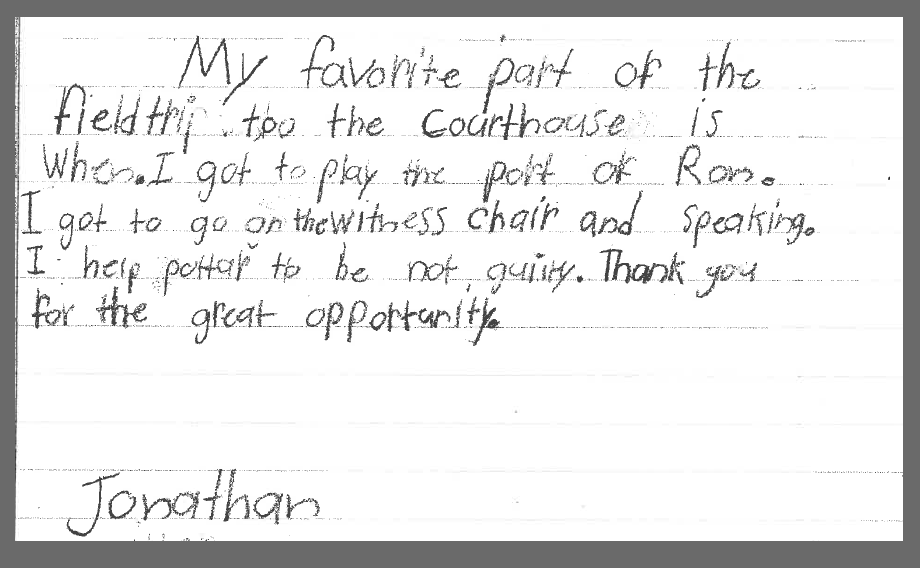 My favorite part of the fieldtrip to the courthouse is when I got to play the part of Ron. I got to go on the witness chair and speaking. I helped Potter to be not guilty. Thank you for the great opportunity.
 Thank you for letting us experience court for the first time. It was the best experience ever, thank you for everything. You really made me think about being a judge. Thank you
-Mina L [ Twitchell Elementary - Grade 5]
 Thank you for letting us watch the civil case! It was cool because it was a real case and not one played out. I had a lot of fun watching the other kids act out a session. Thank you for your time.
- Kaylie [Hewetson Elementary - Grade 5]